Over the past several weeks, we’ve traveled through some remarkable company.
We’ve stood watch with the Stoics as they reminded us that character is forged in the choices we make, especially when life refuses to cooperate. They taught us that while we cannot command the wind or the sea, we can always command the hand that holds the helm.
Then we slowed our pace and walked beside Lao Tzu.
Where the Stoics taught discipline, Taoism taught trust. Instead of forcing every outcome, we learned to recognize the current beneath the surface and the wisdom of moving with life rather than endlessly against it.
Last week, we spent time with Ayn Rand.
Whether one agrees with every conclusion she reached is almost beside the point. She challenged us to become builders. To create rather than consume. To accept that worthwhile things rarely appear by accident. Houses, businesses, families, communities—even character itself—are built one deliberate choice at a time.
Each week has offered something valuable.
But a life well-lived requires more than discipline.
More than flow.
More than purpose.
It also requires a heart.
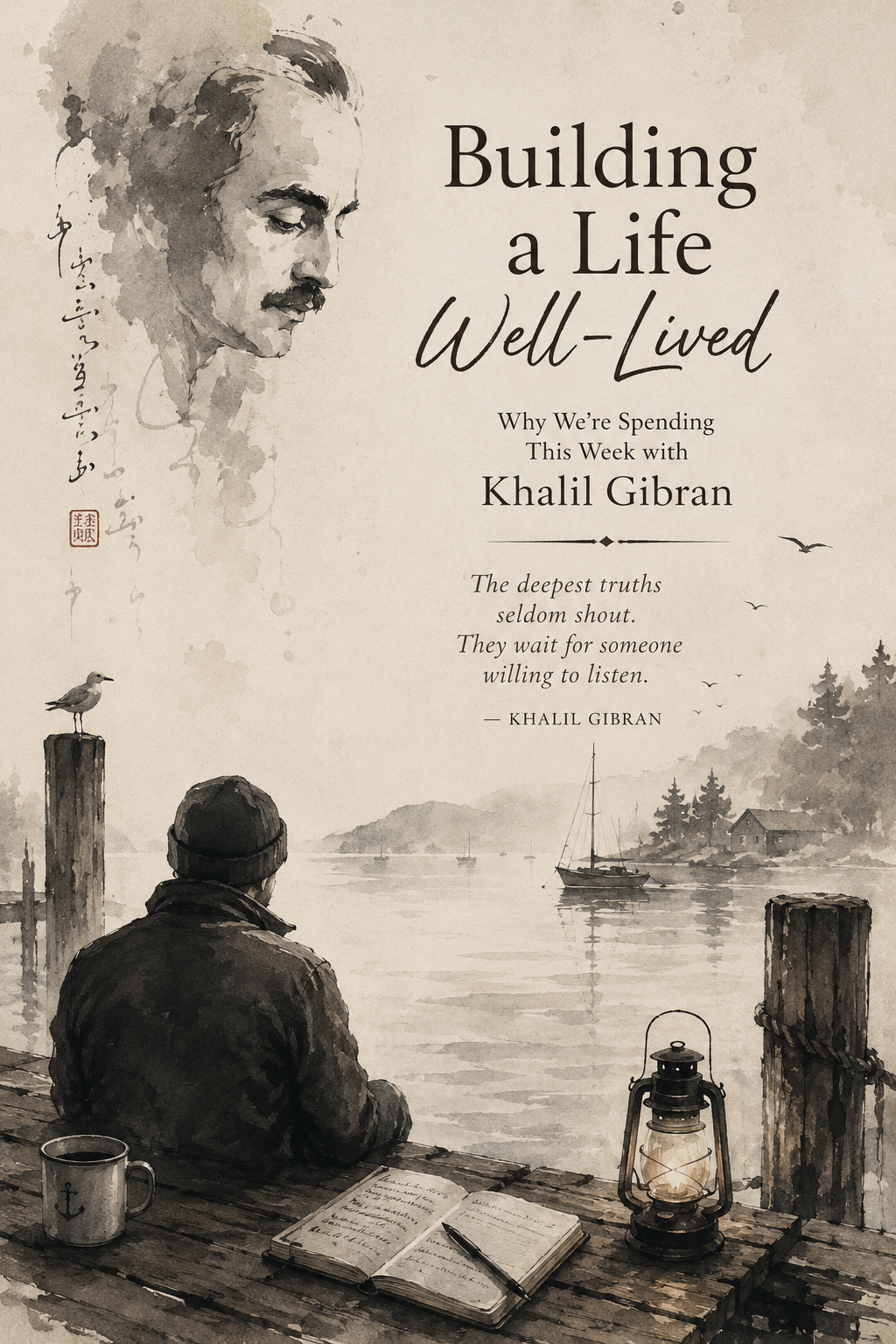
That brings us to Khalil Gibran.
Gibran never seemed interested in winning arguments. He wasn’t trying to construct an airtight philosophy or convince the world that his way was the only way. Instead, he quietly observed what it means to be human.
He wrote about joy and sorrow, work and love, freedom and friendship, giving and loss—not as opposites to be conquered, but as companions that travel together.
We spend much of our lives trying to separate things that perhaps were never meant to be separated.
We chase joy while running from sorrow.
We seek love without vulnerability.
We want freedom without responsibility.
We pursue success while hoping to avoid sacrifice.
Nature doesn’t seem to work that way.
The sea doesn’t offer fair winds without storms.
Sunrise has little meaning without the long darkness that came before it.
A sailor cannot appreciate a safe harbor unless he has first spent time offshore.
Push and pull.
Ebb and flood.
Light and shadow.
Building and resting.
Speaking and listening.
Life is filled with these pairings—not because the world is confused, but because it is complete.
Perhaps wisdom isn’t found in choosing one side over the other.
Perhaps it is found in learning to live faithfully between them.
That may be Gibran’s greatest gift.
He reminds us that the deepest truths often arrive quietly. They rarely announce themselves with certainty. Instead, they appear in ordinary conversations, shared meals, worn hands, old friendships, morning coffee, the sound of rain on a cabin roof, or a peaceful harbor after a difficult passage.
This week, I hope we won’t simply read Gibran.
I hope we’ll slow down enough to notice what he noticed.
Because in a world that constantly asks us to do more, own more, hurry more, and prove more, Gibran gently asks a different question:
Who are you becoming while you’re busy building your life?
That’s a question worth spending a week with.
Fair winds,
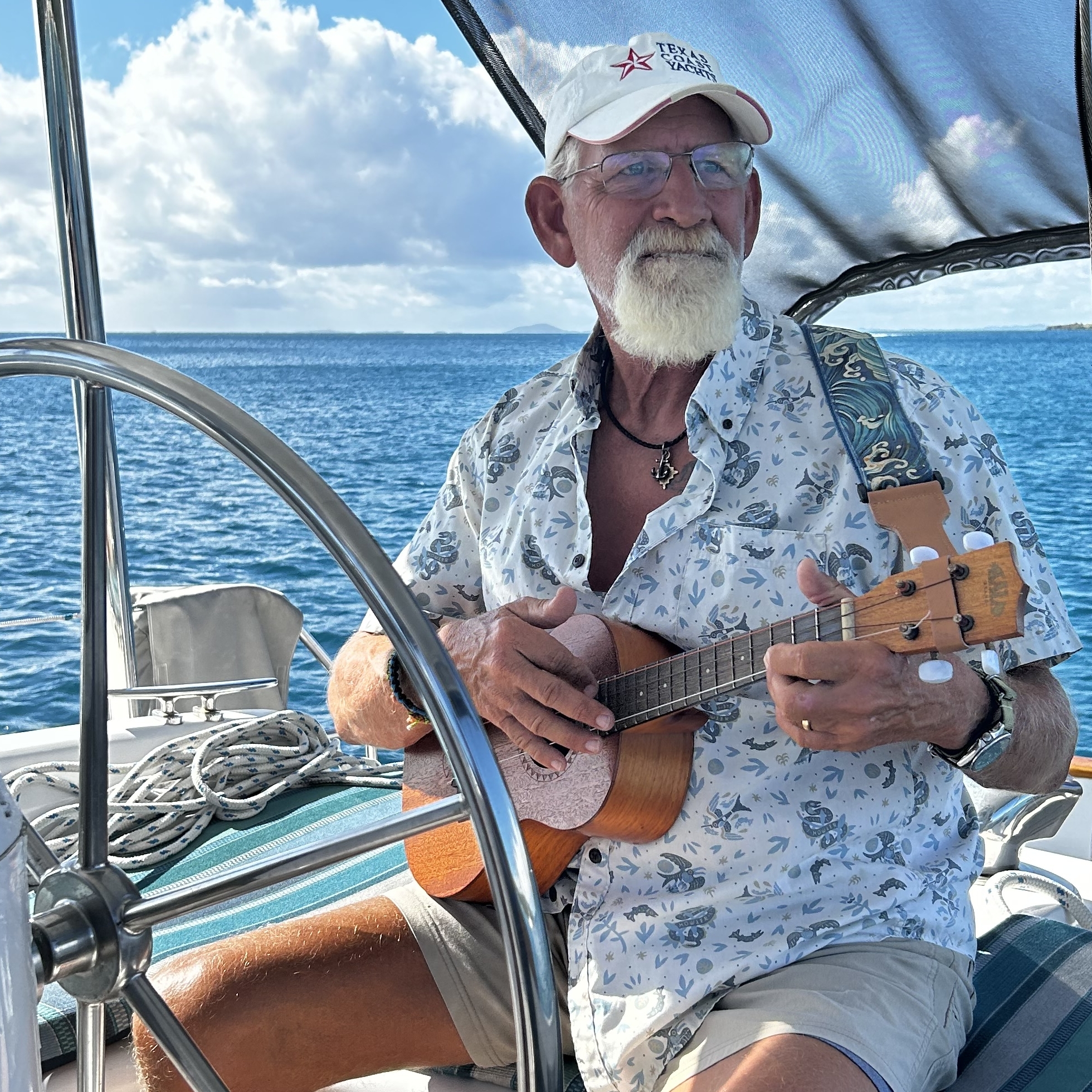
Captain Michael