

What NBA 2K27 MyTEAM Season 1 Cards Does U4GM Recommend
What NBA 2K27 MyTEAM Season 1 Cards Does U4GM Recommend
What NBA 2K27 MyTEAM Season 1 Cards Does U4GM Recommend
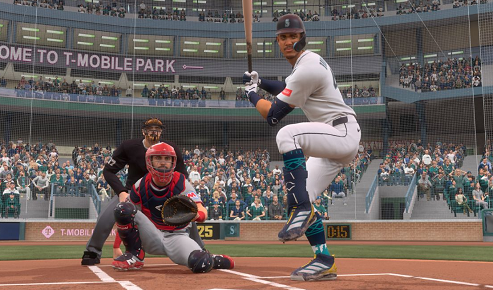

NBA 2K27 MyTEAM Season 1 is still finding its rhythm, so this is a good time to build a useful squad without throwing every coin at one flashy name. If you manage your #9945FF] hover:underline' target='_blank' rel='noopener noreferrer'>2K27 MT carefully, you can cover several weak spots instead of trying to force one superstar to carry the whole lineup. Ratings matter, sure, but they do not tell the full story. A player's release, movement, body type, defensive reach, and ability to fit your style can matter just as much. You will notice that pretty quickly in actual games. Some expensive cards feel awkward, while a cheaper card with smooth animations can quietly become one of the most reliable players on your team. Season 1 is also early enough for prices to move around, so there is no need to rush every purchase the moment you see a popular card.
Spend More on Players Who Change Matchups
LaMelo Ball is one of the better premium point guards for this stage of the game. His 6'7" frame gives him a real advantage against smaller guards, especially when you are creating space near the perimeter or attacking a switch. He can pass, finish, defend reasonably well, and use his fadeaway to punish defenders who give him room. His standstill jumper can feel a little less dependable, though, so he is not perfect for every player. At around 70,000 MT, he makes the most sense if you want size at point guard and are comfortable creating your own shots.
Grant Hill offers a similar kind of value on the wing. He is about 6'8", can play in several roles, and gives you enough rebounding and defensive flexibility to make lineup changes during a game. His three-point rating is only 79, and his 75 driving dunk will not impress everyone, but his size covers for some of those numbers. If you want a guard or forward who can do a bit of everything, Hill is easier to build around than a specialist who only provides scoring.
Breanna Stewart deserves attention for a different reason. She can guard inside players and still stay with wings on the perimeter. Her 89 three-point rating, 92 mid-range rating, 91 interior defense, and 87 perimeter defense make her useful in a two-way lineup. She is not the best choice if your whole offence depends on constant rim attacks, but she is comfortable in a system built around spacing, smart cuts, and defensive switches. Chuck Person is worth a look when you simply need another shooter with size. Just remember that his defensive limitations can create problems against stronger offensive wings.
Budget Guards Can Save the Rest of Your Squad
Fred Brown is the kind of card many players overlook because he does not have the same name value as the premium options. That would be a mistake if you are working with a tight budget. His 89 three-point rating and 90 free throw rating make him dependable when you need open shots converted. He also has enough speed, agility, stealing, and perimeter defence to stay involved on the other end. Brown is not going to bully anyone in the paint, but that is not his job. Let him handle the ball, move it quickly, hit open jumpers, and stay in front of opposing guards. At roughly 12,000 to 15,000 MT, he leaves room to improve another position.
Kendall Gill brings a little more pressure as a scorer. His 83 three-point rating is solid, and his 85 driving dunk gives him a way to punish defenders who overplay the jumper. His 84 steal and 84 perimeter defence are useful too. The Pro 2 Fade animation adds another option when a defender expects you to drive. Gill will not have every tool found on a much more expensive shooting guard, but he does enough in several areas that the price feels fair. These are the cards that help a new roster feel complete rather than top-heavy.
Jalen Brown is harder to recommend at close to 100,000 MT. The Galaxy Opal label looks attractive, but rarity is not the same thing as value. His shooting does not create a clear gap over cheaper wings, and that amount of currency could improve your point guard, shooting guard, and center at the same time. A card has to make a noticeable difference to justify that sort of premium, particularly in the opening weeks.
Frontcourt Choices Depend on Your Spacing
Giannis Antetokounmpo remains the luxury purchase. His size, speed, finishing, and defence cause matchup problems at power forward or center. If you have a huge reserve and want a dominant centerpiece, he can deliver. The issue is the price, which can pass 800,000 MT. Most players would get more from spreading that money across several positions. Series 1 Giannis is much easier to fit into a developing team. He does not carry the same elite attributes, but he still brings length, athleticism, inside scoring, and useful defence without putting your whole budget at risk. LeBron James and Kevin Durant can also make sense, although your preferred style should decide whether either one is worth the cost.
Anthony Davis is a more practical center for many Season 1 lineups. At 6'10" with a 7'6" wingspan, he has enough length to contest shots and battle larger bigs, yet he does not feel stuck in the paint. His 82 block, 85 interior defence, 80 perimeter defence, and 82 defensive rebounding ratings give him a solid base. He can also finish with 85 standing dunk and 85 driving dunk ratings. Dwight Howard brings strength and athleticism, but his lack of dependable shooting can shrink the floor. If your other four players already struggle to create space, Howard may make the problem worse.
Shop Around Your Weakest Position
The best way to improve a Season 1 roster is usually less exciting than buying the biggest name on the market. Look at the position costing you games. If your point guard cannot defend or create, fix that first. If your center gives up easy rebounds, solve the frontcourt before upgrading an already strong wing. Prices can shift after new packs, challenges, rewards, and events arrive, so patience has real value. A card listed for 70,000 MT today might drop sharply after the next release. Keep some currency available and compare similar players instead of following the crowd. You do not need five elite cards to compete. You need players whose strengths cover one another and whose releases you can use comfortably.
Final Thoughts
The strongest Season 1 teams will not all look the same. LaMelo Ball and Grant Hill offer size and flexibility, while Fred Brown and Kendall Gill give budget lineups dependable guard play. Stewart adds two-way value, Series 1 Giannis supplies frontcourt power at a safer cost, and Anthony Davis remains one of the easiest centers to build around. Premium Giannis is impressive, but he should come after the rest of the roster is in good shape. Keep checking the market, upgrade the position that hurts you most, and leave enough currency for future content. When you are ready to make a larger purchase, compare the card's real impact with the cost to #9945FF] hover:underline' target='_blank' rel='noopener noreferrer'>buy 2K27 MT rather than judging it by overall rating alone.