


🌱 Why I Keep Windows Around: A Personal Reflection on Dual‑Booting During My Linux Journey
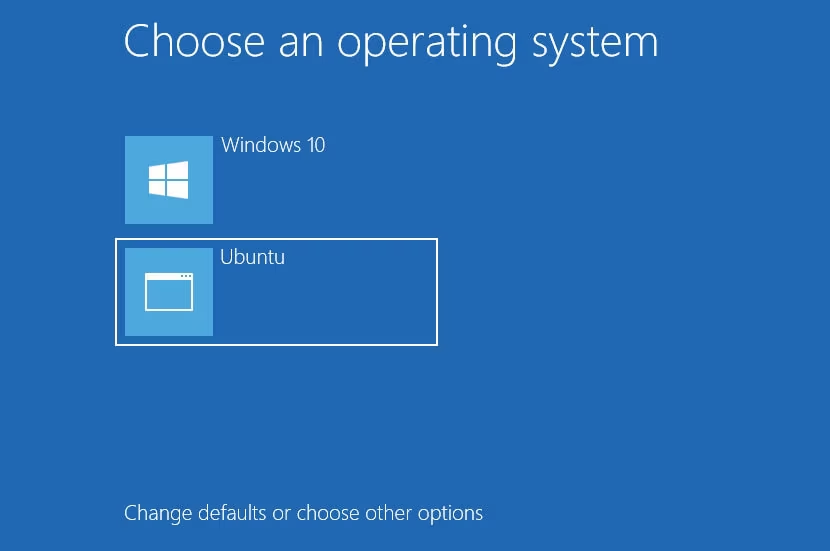
When I first decided to switch to Linux, I imagined a clean break — a triumphant wipe of my Windows partition followed by a glorious rebirth into the world of open‑source freedom. But reality has a way of humbling even the most enthusiastic idealists. Over time, I’ve come to appreciate that keeping Windows installed alongside Linux isn’t a sign of hesitation or half‑commitment. It’s a practical, stabilizing choice that makes the transition smoother, less stressful, and far more enjoyable.
🧩 Compatibility Isn’t Just a Buzzword — It’s a Lifeline
No matter how committed I am to Linux, there are still certain tasks that Windows handles better or more reliably. Whether it’s a piece of proprietary software for work, a firmware update tool that only exists for Windows, or a game with anti‑cheat that refuses to cooperate with Proton, having Windows available means I don’t have to fight with my system just to get something done. Instead of wrestling with workarounds, I can simply reboot, handle the task, and return to Linux without frustration.
🎮 Gaming, Drivers, and the Realities of Everyday Use
Linux gaming has come a long way — honestly, it’s astonishing how much progress has been made. But it’s not perfect. Some titles still misbehave, some peripherals still require Windows-only utilities, and some GPU drivers get finicky after updates. Keeping Windows around gives me a safety net. If something breaks on Linux, I’m not locked out of my hobbies or productivity. I can still unwind, still work, still function.
🛠️ A Safe Space for Troubleshooting
Linux is powerful, flexible, and endlessly customizable — which also means it’s possible to break things in spectacular ways. When I’m experimenting with new distros, kernels, or window managers, I like knowing that if I accidentally nuke my bootloader or misconfigure something beyond repair, I still have a functioning OS to fall back on. Windows becomes a kind of “home base” while I explore the Linux wilderness.
📚 Learning Takes Time — And That’s Okay
Transitioning to Linux isn’t just about installing a new OS. It’s about learning new tools, new workflows, and sometimes entirely new ways of thinking. That learning curve can be steep. Keeping Windows around removes the pressure to master everything immediately. I can take my time, explore at my own pace, and gradually shift more of my daily life into Linux as I grow more comfortable.
🧘 Peace of Mind Is Underrated
There’s something reassuring about knowing that no matter what happens — a broken update, a misconfigured driver, a botched experiment — I’m never more than a reboot away from a stable environment. That peace of mind makes me more willing to experiment, more willing to learn, and more willing to push Linux to its limits. Dual‑booting doesn’t hold me back; it empowers me.
🌟 Dual‑Booting Isn’t a Crutch — It’s a Bridge
Some people treat dual‑booting like a temporary phase, something to “graduate” from. But I’ve come to see it differently. It’s a bridge between two worlds, letting me enjoy the strengths of both systems without forcing myself into an all‑or‑nothing mindset. Maybe one day I’ll go full Linux. Maybe I won’t. But for now, dual‑booting gives me the flexibility and confidence to explore Linux deeply without sacrificing the tools and conveniences I still rely on.
 Deutsch
 English
 العربية
 Français
 Español
 Português
 Türkçe
 Nederlands
 Italiano
 Русский
 Română
 Português (Brasil)
 Ελληνικά
 Filipino
 Igbo
Igbo