


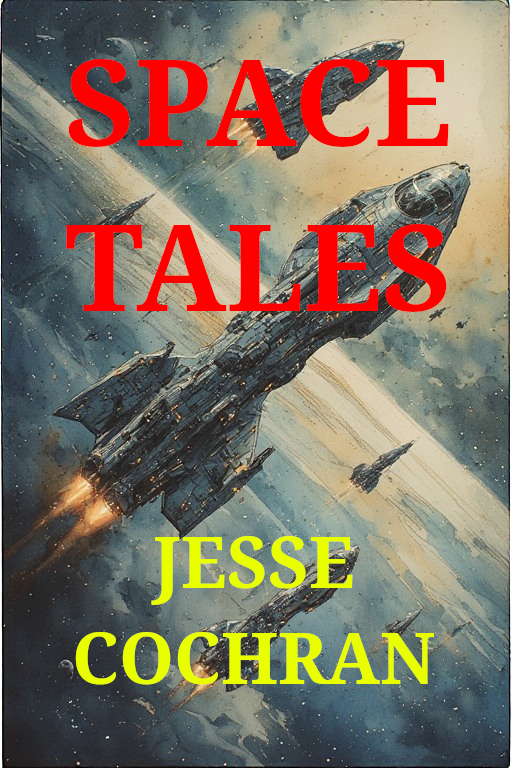
A couple of years ago I wrote a novel called Space Tales, which is about a world, similar to Star Trek/Wars but not really in that type of way.
Space Tales takes place in a future where space is no longer mysterious—it’s spectacular. Humanity (and others) long ago solved faster-than-light travel, but instead of using it purely for conquest or exploration, civilization found something far more profitable: turning space combat into entertainment.
Entire planets tune in to watch aerial dogfights in open vacuum, staged across asteroid belts, shattered moons, and artificial sky-domes that simulate atmosphere where none should exist. These aren’t wars. They’re matches. Pilots are celebrities. Ships are branded. Victories are sponsored, replayed, debated, and mythologized.
At the center of this universe is Barabas—not a wide-eyed idealist, not a chosen one, but a professional. A pilot forged by discipline, instinct, and scars. Barabas flies not because he dreams of glory, but because flying is the only place the universe ever made sense to him. Inside the cockpit, chaos obeys rules.
The sport itself is brutal.
There are no “health bars,” no scripted outcomes. Shields fail. Systems misfire. Mistakes kill. Viewers know this, and that danger is the thrill. Each season introduces new arenas, new rule variations, and experimental ship technologies that blur the line between sport and warfare. Rumors circulate that some matches are less “sporting” than advertised.
As the novel unfolds, Barabas rises through the ranks—not just as a pilot, but as a symbol. His flying style is unconventional, almost reckless, yet mathematically precise. Commentators can’t explain it. Fans argue over him. Sponsors want him, leagues fear him, and something deeper begins watching him closely.
Behind the glamor of the broadcasts, Space Tales slowly peels back the infrastructure that makes the sport possible:
Corporations that design ships optimized for spectacle rather than survival.
Political factions using matches to test weapons and pilots without declaring war.
Viewers who are unknowingly voting with their attention on which worlds deserve protection—and which don’t.
Barabas begins to realize that the arenas he flies through aren’t chosen randomly. Some resemble real battlefields from forgotten conflicts. Others mirror locations of future invasions. The sport is no longer just entertainment—it’s rehearsal.
The action escalates not just in scale, but in meaning. Dogfights become puzzles. Rivals become mirrors of who Barabas might have been under different circumstances. Each victory costs more than the last, and the question stops being how to win and becomes whether winning is the trap.
And then comes the ending—unique, unsettling, and quiet in the most unexpected way.
No massive final explosion.
No clear hero’s triumph.
Instead, a moment where Barabas is forced to choose between:
Remaining the greatest pilot ever broadcast
Or breaking the very system that taught the universe to cheer for destruction
The final pages don’t just conclude a story—they reframe everything the reader thought the novel was about. The sport. The fights. The fame. Even space itself.
Space Tales ultimately isn’t about spaceships at all.
It’s about what happens when a civilization decides that its greatest stories should be watched live—and what it costs the people inside the cockpit.
Sounds like a good read, right?
Space Tales takes place in a future where space is no longer mysterious—it’s spectacular. Humanity (and others) long ago solved faster-than-light travel, but instead of using it purely for conquest or exploration, civilization found something far more profitable: turning space combat into entertainment.
Entire planets tune in to watch aerial dogfights in open vacuum, staged across asteroid belts, shattered moons, and artificial sky-domes that simulate atmosphere where none should exist. These aren’t wars. They’re matches. Pilots are celebrities. Ships are branded. Victories are sponsored, replayed, debated, and mythologized.
At the center of this universe is Barabas—not a wide-eyed idealist, not a chosen one, but a professional. A pilot forged by discipline, instinct, and scars. Barabas flies not because he dreams of glory, but because flying is the only place the universe ever made sense to him. Inside the cockpit, chaos obeys rules.
The sport itself is brutal.
There are no “health bars,” no scripted outcomes. Shields fail. Systems misfire. Mistakes kill. Viewers know this, and that danger is the thrill. Each season introduces new arenas, new rule variations, and experimental ship technologies that blur the line between sport and warfare. Rumors circulate that some matches are less “sporting” than advertised.
As the novel unfolds, Barabas rises through the ranks—not just as a pilot, but as a symbol. His flying style is unconventional, almost reckless, yet mathematically precise. Commentators can’t explain it. Fans argue over him. Sponsors want him, leagues fear him, and something deeper begins watching him closely.
Behind the glamor of the broadcasts, Space Tales slowly peels back the infrastructure that makes the sport possible:
Corporations that design ships optimized for spectacle rather than survival.
Political factions using matches to test weapons and pilots without declaring war.
Viewers who are unknowingly voting with their attention on which worlds deserve protection—and which don’t.
Barabas begins to realize that the arenas he flies through aren’t chosen randomly. Some resemble real battlefields from forgotten conflicts. Others mirror locations of future invasions. The sport is no longer just entertainment—it’s rehearsal.
The action escalates not just in scale, but in meaning. Dogfights become puzzles. Rivals become mirrors of who Barabas might have been under different circumstances. Each victory costs more than the last, and the question stops being how to win and becomes whether winning is the trap.
And then comes the ending—unique, unsettling, and quiet in the most unexpected way.
No massive final explosion.
No clear hero’s triumph.
Instead, a moment where Barabas is forced to choose between:
Remaining the greatest pilot ever broadcast
Or breaking the very system that taught the universe to cheer for destruction
The final pages don’t just conclude a story—they reframe everything the reader thought the novel was about. The sport. The fights. The fame. Even space itself.
Space Tales ultimately isn’t about spaceships at all.
It’s about what happens when a civilization decides that its greatest stories should be watched live—and what it costs the people inside the cockpit.
Sounds like a good read, right?
A couple of years ago I wrote a novel called Space Tales, which is about a world, similar to Star Trek/Wars but not really in that type of way.
Space Tales takes place in a future where space is no longer mysterious—it’s spectacular. Humanity (and others) long ago solved faster-than-light travel, but instead of using it purely for conquest or exploration, civilization found something far more profitable: turning space combat into entertainment.
Entire planets tune in to watch aerial dogfights in open vacuum, staged across asteroid belts, shattered moons, and artificial sky-domes that simulate atmosphere where none should exist. These aren’t wars. They’re matches. Pilots are celebrities. Ships are branded. Victories are sponsored, replayed, debated, and mythologized.
At the center of this universe is Barabas—not a wide-eyed idealist, not a chosen one, but a professional. A pilot forged by discipline, instinct, and scars. Barabas flies not because he dreams of glory, but because flying is the only place the universe ever made sense to him. Inside the cockpit, chaos obeys rules.
The sport itself is brutal.
There are no “health bars,” no scripted outcomes. Shields fail. Systems misfire. Mistakes kill. Viewers know this, and that danger is the thrill. Each season introduces new arenas, new rule variations, and experimental ship technologies that blur the line between sport and warfare. Rumors circulate that some matches are less “sporting” than advertised.
As the novel unfolds, Barabas rises through the ranks—not just as a pilot, but as a symbol. His flying style is unconventional, almost reckless, yet mathematically precise. Commentators can’t explain it. Fans argue over him. Sponsors want him, leagues fear him, and something deeper begins watching him closely.
Behind the glamor of the broadcasts, Space Tales slowly peels back the infrastructure that makes the sport possible:
Corporations that design ships optimized for spectacle rather than survival.
Political factions using matches to test weapons and pilots without declaring war.
Viewers who are unknowingly voting with their attention on which worlds deserve protection—and which don’t.
Barabas begins to realize that the arenas he flies through aren’t chosen randomly. Some resemble real battlefields from forgotten conflicts. Others mirror locations of future invasions. The sport is no longer just entertainment—it’s rehearsal.
The action escalates not just in scale, but in meaning. Dogfights become puzzles. Rivals become mirrors of who Barabas might have been under different circumstances. Each victory costs more than the last, and the question stops being how to win and becomes whether winning is the trap.
And then comes the ending—unique, unsettling, and quiet in the most unexpected way.
No massive final explosion.
No clear hero’s triumph.
Instead, a moment where Barabas is forced to choose between:
Remaining the greatest pilot ever broadcast
Or breaking the very system that taught the universe to cheer for destruction
The final pages don’t just conclude a story—they reframe everything the reader thought the novel was about. The sport. The fights. The fame. Even space itself.
Space Tales ultimately isn’t about spaceships at all.
It’s about what happens when a civilization decides that its greatest stories should be watched live—and what it costs the people inside the cockpit.
Sounds like a good read, right?
0 Комментарии
0 Поделились
54 Просмотры

 English
 Arabic
 French
 Spanish
 Portuguese
 Deutsch
 Turkish
 Dutch
Dutch
 Italiano
 Romaian
 Portuguese (Brazil)
 Greek
Greek