Space Monkey: A professional precious-metals refiner in Huizhou, Guangdong, China, known as Qiao, has gone viral after revealing what
A professional precious-metals refiner in Huizhou, Guangdong, China, known as Qiao, has gone viral after revealing what was hiding inside mountains of electronic scrap: real gold.
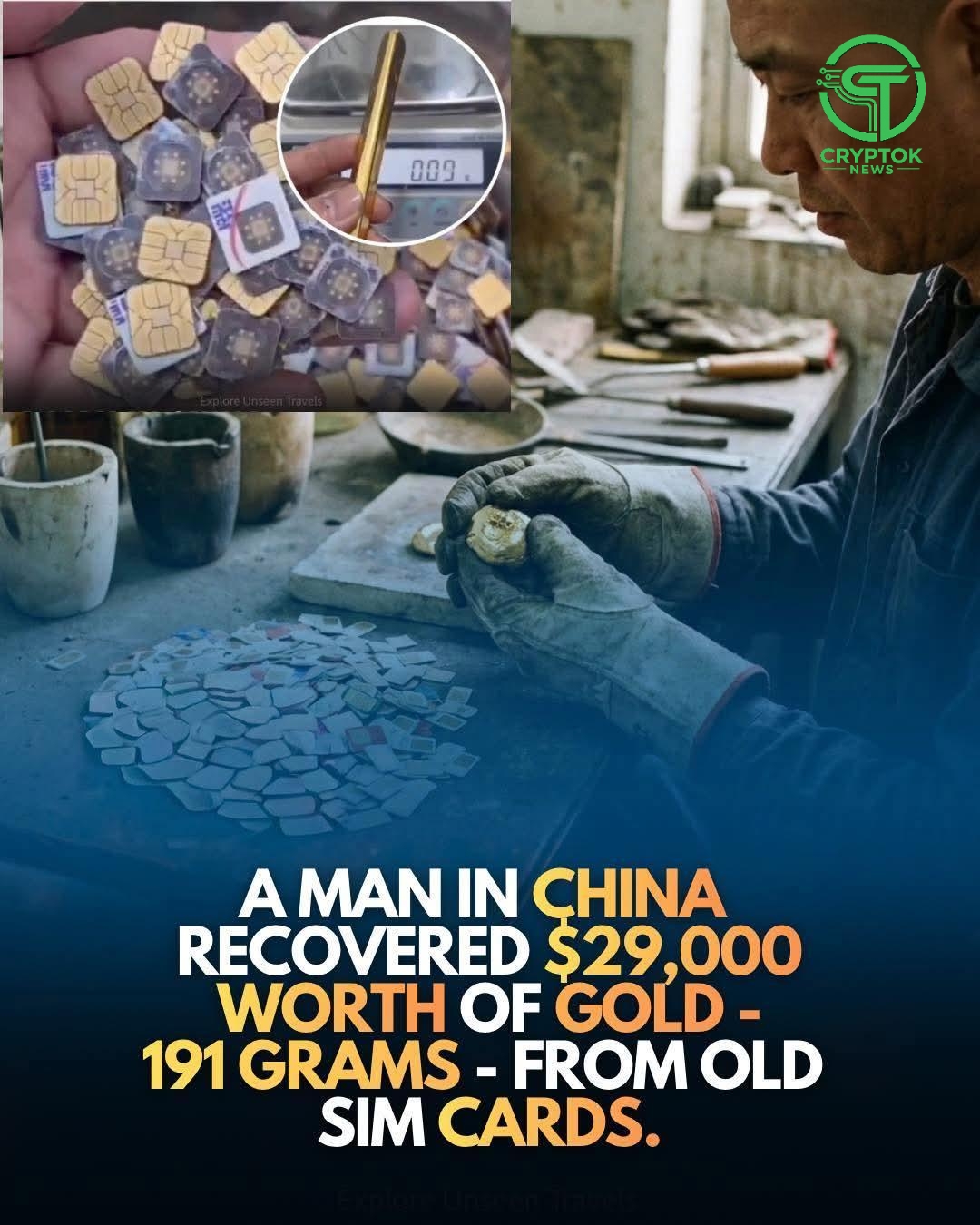
In the now widely shared video, Qiao is seen processing old SIM card chips and telecom components through a series of chemical baths, filtration stages, corrosion, displacement, and intense heating before finally pouring a solid gold bar weighing about 191 grams.
That amount is worth roughly 200,000 yuan, or around $27,000 to $29,000.
But the part many viral posts leave out is this: this did not come from a handful of SIM cards alone.
According to local reports, Qiao processed nearly two tonnes of electronic scrap to get that result. Experts say modern SIM cards contain only tiny traces of gold, often far less than 0.01 grams each, meaning it would take an enormous volume of chips and telecom waste to reach 191 grams.
In other words, this was industrial-scale refining, not a quick life hack.
After the clip spread online, demand for used SIM cards and DIY “gold extraction kits” reportedly surged, prompting warnings from experts and authorities. The process involves extremely dangerous chemicals, often similar to aqua regia, which can release toxic fumes and cause severe burns.
Professionals are stressing that this is not something to try at home, and in many places, refining precious metals from e-waste without permits may also be illegal.
Still, the video is a striking reminder that even the smallest pieces of modern technology can hold hidden value, but only when handled with expertise, scale, and extreme caution.
Space Monkey: A professional precious-metals refiner in Huizhou, Guangdong, China, known as Qiao, has gone viral after revealing what
A professional precious-metals refiner in Huizhou, Guangdong, China, known as Qiao, has gone viral after revealing what was hiding inside mountains of electronic scrap: real gold. In the now widely shared video, Qiao is seen processing old SIM card chips and telecom components through a series of chemical baths, filtration stages, corrosion, displacement, and intense heating before finally pouring a solid gold bar weighing about 191 grams. That amount is worth roughly 200,000 yuan, or around $27,000 to $29,000. But the part many viral posts leave out is this: this did not come from a handful of SIM cards alone. According to local reports, Qiao processed nearly two tonnes of electronic scrap to get that result. Experts say modern SIM cards contain only tiny traces of gold, often far less than 0.01 grams each, meaning it would take an enormous volume of chips and telecom waste to reach 191 grams. In other words, this was industrial-scale refining, not a quick life hack. After the clip spread online, demand for used SIM cards and DIY “gold extraction kits” reportedly surged, prompting warnings from experts and authorities. The process involves extremely dangerous chemicals, often similar to aqua regia, which can release toxic fumes and cause severe burns. Professionals are stressing that this is not something to try at home, and in many places, refining precious metals from e-waste without permits may also be illegal. Still, the video is a striking reminder that even the smallest pieces of modern technology can hold hidden value, but only when handled with expertise, scale, and extreme caution.
A professional precious-metals refiner in Huizhou, Guangdong, China, known as Qiao, has gone viral after revealing what was hiding inside mountains of electronic scrap: real gold. In the now widely shared video, Qiao is seen processing old SIM card chips and telecom components through a series of chemical baths, filtration stages, corrosion, displacement, and intense heating before finally pouring a solid gold bar weighing about 191 grams. That amount is worth roughly 200,000 yuan, or around $27,000 to $29,000. But the part many viral posts leave out is this: this did not come from a handful of SIM cards alone. According to local reports, Qiao processed nearly two tonnes of electronic scrap to get that result. Experts say modern SIM cards contain only tiny traces of gold, often far less than 0.01 grams each, meaning it would take an enormous volume of chips and telecom waste to reach 191 grams. In other words, this was industrial-scale refining, not a quick life hack. After the clip spread online, demand for used SIM cards and DIY “gold extraction kits” reportedly surged, prompting warnings from experts and authorities. The process involves extremely dangerous chemicals, often similar to aqua regia, which can release toxic fumes and cause severe burns. Professionals are stressing that this is not something to try at home, and in many places, refining precious metals from e-waste without permits may also be illegal. Still, the video is a striking reminder that even the smallest pieces of modern technology can hold hidden value, but only when handled with expertise, scale, and extreme caution.