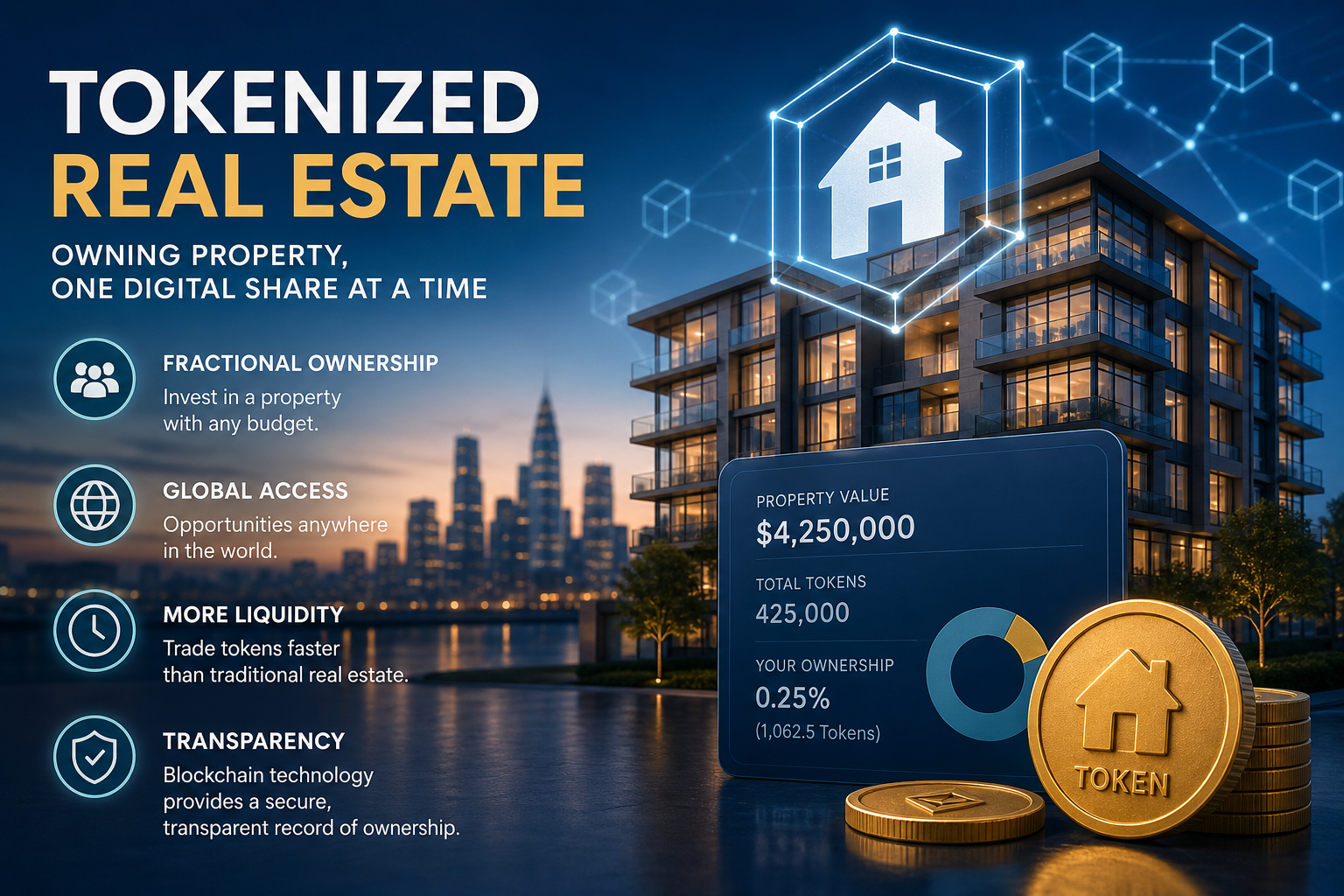

InfluencerX: Tokenized Real Estate: Owning Property One Digital Share at a Time Real estate has long been one of the most reliable wa
Tokenized Real Estate: Owning Property One Digital Share at a Time Real estate has long been one of the most reliable ways to build wealth—but also one of the hardest to access. High upfront costs, slow transactions, and geographic limitations have kept many people on the sidelines. Tokenized real estate is changing that by merging property ownership with blockchain technology, opening the door to a more liquid, global, and accessible market. What Is Tokenized Real Estate? Tokenized real estate is the process of converting ownership of a physical property into digital tokens recorded on a blockchain. Each token represents a fractional share of the property, similar to how shares represent ownership in a company. Instead of needing $50,000 or more for a down payment, an investor might be able to buy a few hundred dollars’ worth of tokens tied to a commercial building, rental home, or development project. At its core, tokenization leverages Blockchain to create a secure, transparent ledger of ownership that can be easily transferred between parties. How It Works Property Selection A real estate asset—such as an apartment building—is chosen and legally structured (often through an LLC or similar entity). Token Creation Ownership is divided into digital tokens using a Smart Contract, which defines rights like income distribution and voting power. Investor Access Investors purchase tokens through a platform, gaining proportional ownership. Income & Appreciation Token holders may receive rental income and benefit from property value increases Secondary Market Trading Tokens can potentially be bought and sold more easily than traditional real estate, improving liquidity. Why Tokenization Matters 1. Lower Barrier to Entry Tokenization allows smaller investors to access real estate markets that were previously out of reach. You no longer need to buy an entire property—you can own a slice. 2. Increased Liquidity Traditional real estate transactions can take months. Tokenized assets, in theory, can be traded much faster, sometimes even 24/7 on digital platforms. 3. Global Investment Opportunities Investors can diversify across cities or even countries without physically being there. 4. Transparency Blockchain records every transaction, making ownership history clear and verifiable. The Risks and Challenges Despite its promise, tokenized real estate is not without complications: Regulatory Uncertainty Laws around digital assets and property ownership are still evolving, especially in the U.S. Platform Risk Many tokenization platforms are startups. If a platform fails, investors could face complications accessing or managing their holdings. Liquidity Isn’t Guaranteed While tokens can be traded, markets for them are still developing. Legal Structure Complexity Ownership is often indirect (through an entity), which can create additional layers of risk. Real-World Use Cases Tokenization is already being applied in several ways: Fractional ownership of rental properties Crowdfunded commercial real estate deals Luxury property investment split among multiple investors Real estate investment portfolios managed digitally Some platforms are even experimenting with combining tokenized property with decentralized finance (DeFi), allowing investors to borrow against their real estate tokens. The Future of Real Estate Investing Tokenized real estate sits at the intersection of property markets and digital finance. While still early, the trend points toward a future where: Property ownership becomes more flexible and divisible Transactions become faster and more automated Investment opportunities become more inclusive However, widespread adoption will depend heavily on regulatory clarity and the maturation of marketplaces. Final Thoughts Tokenized real estate isn’t a magic shortcut to wealth—but it is a meaningful shift in how property ownership can work. For investors willing to navigate a developing space, it offers a chance to participate in real estate in a way that’s more flexible, scalable, and potentially more accessible than ever before. If you’re considering it, treat it like any investment: do your research, understand the structure, and don’t assume liquidity or returns that aren’t guaranteed.
Posted by InfluencerX (@influencerx) on
View this post on CrypTok— the future of social media with zero-fee crypto tipping, live streaming, and DeFi powered by Solana.